Description
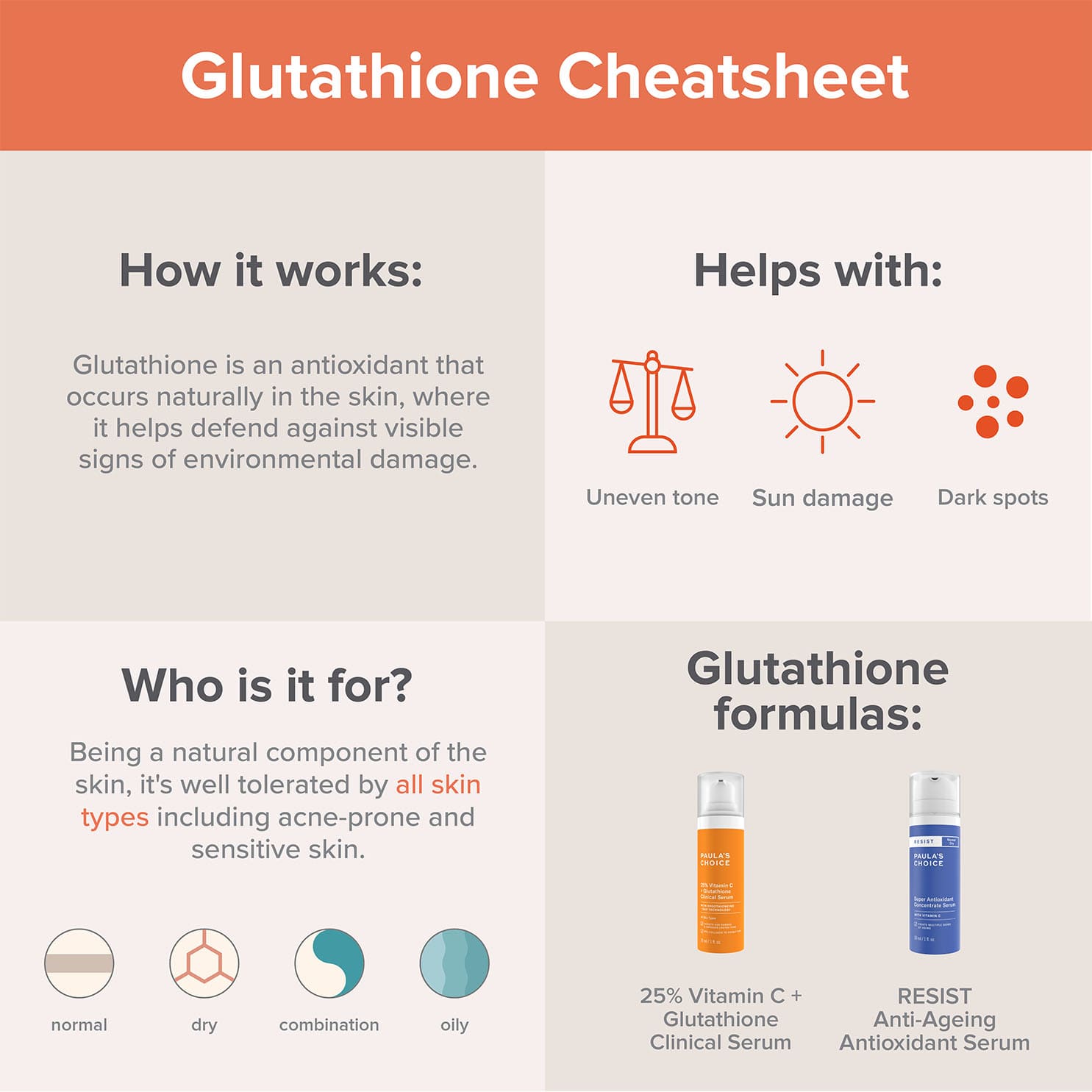
Glutathione is a naturally occurring antioxidant in the skin that helps it defend itself against external aggressors. A gradual decrease in glutathione levels in the skin is thought to contribute to accelerating the appearance of signs of aging.
In addition to being an antioxidant, glutathione is also a peptide composed of three amino acids: cystine, glutamic acid and glycine.
What is the effect of glutathione on the skin?
The three aforementioned amino acids contained in glutathione help it target dark spots. Together, they help restore the skin barrier and brighten the complexion.
How so? Research suggests that glutathione may inhibit an enzyme on the skin’s surface responsible for spots.
Is glutathione good for the skin?
Absolutely! Since this ingredient is naturally present in the skin, its topical application is easily tolerated. Studies have also shown that taking glutathione supplements can help even out skin tone. The only potential concern with glutathione is when administered intravenously. Although rare, some people have reported anaphylactic reactions.
The benefits of glutathione
Glutathione derives its benefits from its powerful antioxidant properties:
- It combats long-term oxidative stress
- It helps to regenerate the skin barrier
- It visibly reduces stains
- It evens out the complexion
- Research has proven that glutathione, when applied directly to brown spots, improves their appearance.
How long does it take to see results?
A study showed that applying a cream containing 2% glutathione twice a day for 10 weeks faded dark spots. As with most ingredients that address uneven skin tone, patience is key! Spots appear over time due to repeated sun exposure. It will also take time for them to fade.
Of course, no skin-brightening routine would be complete without daily, consistent application of sunscreen containing at least SPF 30. Sunscreen helps preserve the results you’re trying to achieve.
Can glutathione have an effect on brown spots?
Glutathione helps restore the skin’s natural radiance and glow. A decrease in the skin’s naturally occurring glutathione levels can contribute to the appearance of signs of aging. Applying it therefore helps maintain a unified and luminous complexion.
Glutathione is not only responsible for the formation of melanin in the skin, but it can also inhibit the enzyme that causes melanin overproduction. Dr. Corey L. Hartman, a dermatologist, states that glutathione “can influence the pathway of pheomelanin production, resulting in a more even skin tone and reducing the formation of free radicals that develop after prolonged exposure to UV light and pollution.”
What are the best active ingredients to combine with glutathione?
At Paula’s Choice, we offer simple asset combinations.
- 1. This star ingredient in skincare has not been proven to prevent or slow down the activity of other brightening ingredients (such as vitamin C, licorice, arbutin, or azelaic acid).
- 2. However, it has been proven that glutathione can help stabilize and improve the effectiveness of other antioxidants such as vitamin C, even when its concentration is low.
“Topical glutathione treatments are the best way to achieve targeted action directly on the desired area,” adds Dr. Hartman.
All you need to do is find a properly formulated glutathione serum that suits your skin type and incorporate it into your routine. Our favorite glutathione products at Paula’s Choice are the RESIST Anti-Aging Antioxidant Serum and the Expert 25% Vitamin C + Glutathione Serum .
What are the side effects of glutathione?
Numerous studies have shown that glutathione can be applied topically without concern, so there is no reason to fear side effects. Since it is naturally present in the skin, it is very well tolerated by everyone, including those with sensitive and acne-prone skin.
Can I apply glutathione every day?
Absolutely. It turns out that the best way to get results with a glutathione treatment is to apply it twice a day. Stick to your routine to see the long-term results of glutathione. Over time, your skin will be less dull, more even-toned, and radiant.
References for this information:
1. International Journal of Dermatology, August 2021, pages 1013-1018
2. Bioscience Reports, May 2021, online publication
3. Journal of Cosmetic Dermatology, June 2019, pages 728-737
4. Pigment International, June 2017, pages 3-6
5. Journal of Pakistan Association of Dermatologists, July-September 2016, online publication
6. Clinical, Cosmetic, and Investigational Dermatology, October 2014, page 267.


Reviews
There are no reviews yet.